



I have a confession to make, one that I share openly in the introduction to my book, Enhanced Leadership. I have struggled with literacy for most of my life. As a child, reading was a battle and my writing was often atrocious.
For years, I carried a sense of academic inadequacy. I learned to mask it, to get by, and to build a successful career in people-focused roles where talking matters more than typing. But whenever I sat down to write - whether it was a strategy paper or a simple email - I felt a familiar paralysis. The blinking cursor became an audience.
As soon as my fingers touched the keyboard, a ‘corporate filter’ descended. I stopped sounding like Lee; I started sounding like a generic “Leader”. I used long words to sound smart. I sanitised my opinions to sound safe. I edited my thoughts before they even hit the page.
Then I discovered a different way to write, one that relies on a simple premise: 70% Me, 30% AI.
This isn’t just a productivity hack. It is a psychological unlock. It is about using AI as a non-judgmental container to capture the unedited self.
The Psychology of the Blank Page
When we type, we tend to edit as we go. We worry about grammar, structure and tone simultaneously. This multitasking strangles creativity. We end up with what I call “synthetic impersonator” - content that looks human on the surface but lacks the beating heart underneath.
To be “bionic” - a human enhanced by technology - we need to separate the generation of ideas from the refinement of them.
My process for writing Enhanced Leadership was built entirely on this separation. I realised that I am a listener and a talker, not a writer. So, I stopped trying to force myself to be one.

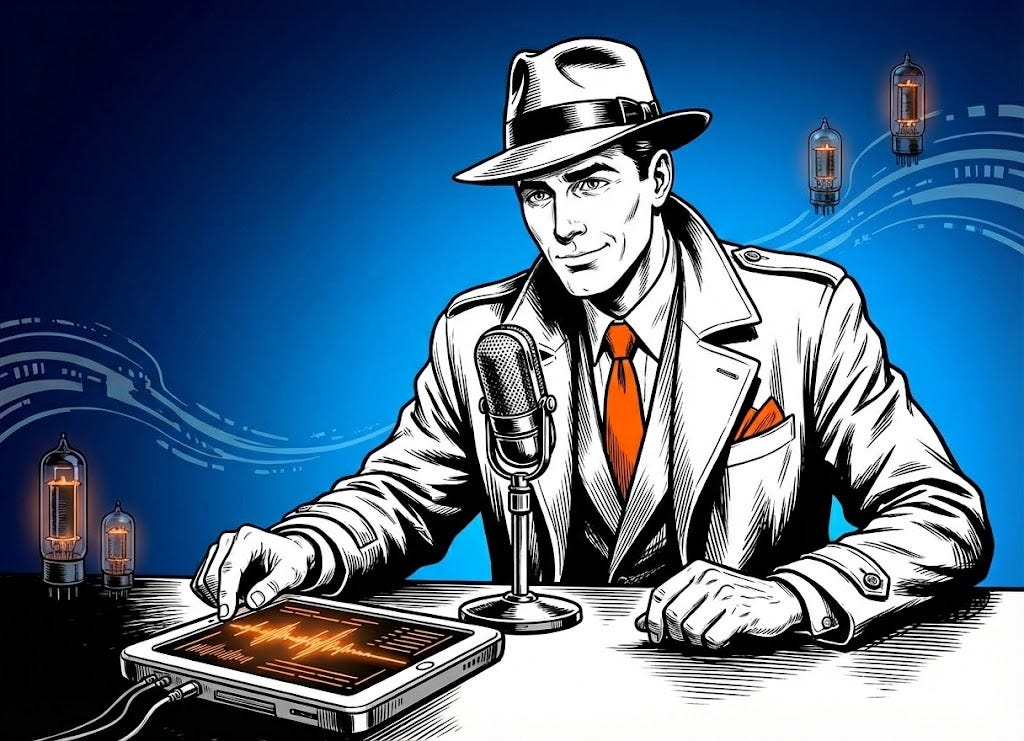
The ‘Voice Stream’ Workflow
Here is the exact workflow I used to write a book that is authentically mine, despite my challenges with the written word.
Step 1: The Brain Dump (The 70%) I do not sit at a desk. I go for a walk. I open a voice recording app on my phone - often just the standard dictation feature or an AI voice note tool.
I speak my thoughts exactly as they come. I do not pause for punctuation. I do not worry if I repeat myself or go down a rabbit hole. I treat the AI as a trusted confidant who is never going to judge me for sounding messy, incoherent or passionate.
Step 2: The Clean Up (The AI Layer) I take that raw, chaotic audio file and run it through an AI tool. But - and this is critical - I do not ask it to “rewrite” the content. I ask it to “tidy” it.
My prompt usually looks like this:
“Process this transcript. Remove the filler words (’um’, ‘er’, ‘you know’). Fix the grammar and sentence structure so it reads like written prose. Do not change the meaning. Do not add new ideas. Keep the tone conversational and direct.”
Step 3: The Human Polish (The Final 30%) What comes back is my voice, stripped of the anxiety. It is readable prose. Now, I can switch into ‘editor mode’. I review it, tweak a phrase here and there, and ensure the nuance is perfect.
Why This Works: The Safe Space
The magic here is not the transcription technology; it is the psychological safety.
An AI does not care if you stutter. It does not judge you for having a half-baked idea. It allows you to be vulnerable in the drafting phase because you know the ‘mess’ will never be seen by a human eye.
This bypasses the inner critic. It allows you to produce content that is raw, honest and deeply authentic. In a digital world where people are tempted to curate perfect online profiles, this authenticity is your most valuable asset.
My Advice
If you find yourself staring at an email for twenty minutes, trying to find the “perfect” words, stop typing.
Pick up your phone. Close your office door. Speak the truth of the situation into an AI tool. Say exactly what you are worried about. Say exactly why writing this is hard but necessary.
Then, let the AI clean up the anxiety. You will find that the message you produce is far more powerful, and builds far more trust, than the corporate script you were trying to write.
Transparency and authenticity are your best defence against the noise of the digital age.
Conclusion
We often fear that AI will rob us of our humanity. My experience has been the opposite. By handling the mechanics of writing, AI allowed me to be more human. It allowed me to share ideas that might otherwise have remained locked in my head.
Do not let the blinking cursor silence you. Speak your truth, let the machine handle the grammar, and lead with your unedited self.
Get the weekly briefing that helps you navigate organisational chaos with clarity.
From mastering difficult conversations to adopting AI without losing the human touch, LevelUp is your weekly guide to leading with confidence.
I would like to say a huge thank you to Kristina for letting me share this here. I love reading her thoughts on AI As A Space For Intimacy.
Subscribe now if you haven’t already!


Thanks for having me, Kristina. We often fear AI will rob us of humanity, but my experience has been the opposite. I am keen to see if your readers find that ‘speaking the truth’ helps them find their unedited self as much as it helped me.
I always say AI amplifies whatever we bring to the table. It has helped me in so many tricky situations. Thanks for sharing this🩷🦩