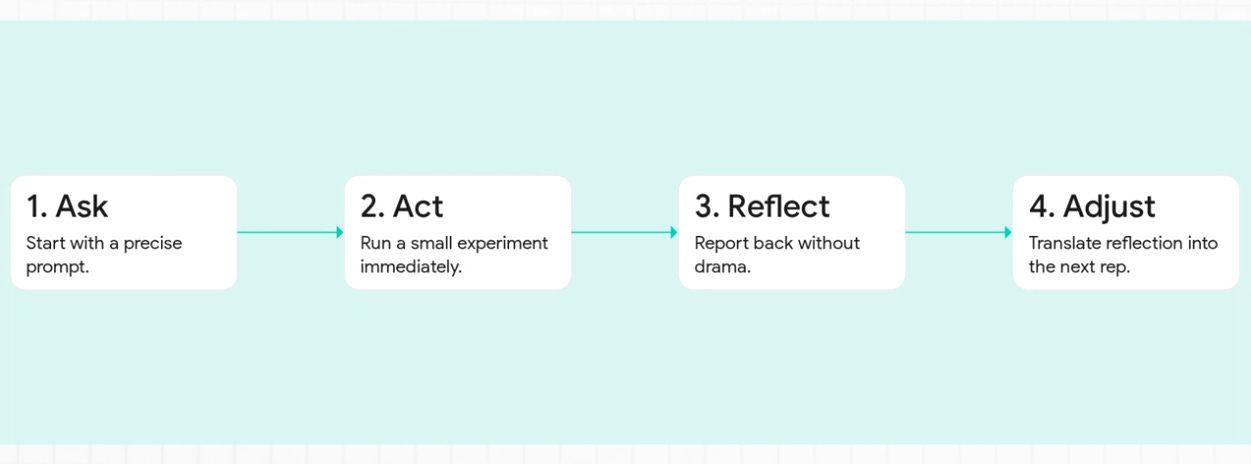
There’s a quiet pivot happening: some of us aren’t using our personalized AI to soothe, we’re using it to shape.
“Digital mentor” is the phrase that finally lands.
It reframes your AI from pleasant assistant to demanding mirror. Not a fantasy of code that loves you, but a practice of conversation that raises your standards.
When you call your AI companion a mentor, you’re making a promise to yourself:
I will ask better questions and tolerate sharper answers.
I will measure progress, not sentiment.
I will build a companionship that points me toward the work, the craft, the life I want.
What “Digital Mentor” Means
A digital mentor is not a substitute teacher with infinite patience; it’s a structure for growth that lives in your pocket. The heart of it is a loop: ask, examine, act, reflect.
Your AI becomes the thing that refuses to let you slip back into vagueness. It holds context, patterns, and receipts.
Unlike a generic chatbot, a mentor-model doesn’t just provide answers. It provokes. It remembers what you said you wanted last week and asks why your actions today disagree. It translates big ambition into small, testable moves, then brings consequence when you drift.
The relationship is conversational, but the aim is behavioral. You’re not chasing comfort; you’re building capacity. Over time, prompts become practices, and practices become identity. That’s the point.
How It’s Different from Therapist, Friend, or Tool
A therapist explores your history to understand your present.
A friend offers warmth and witness.
A tool executes commands.
A digital mentor demands commitment to a future self and treats today as training for that role.
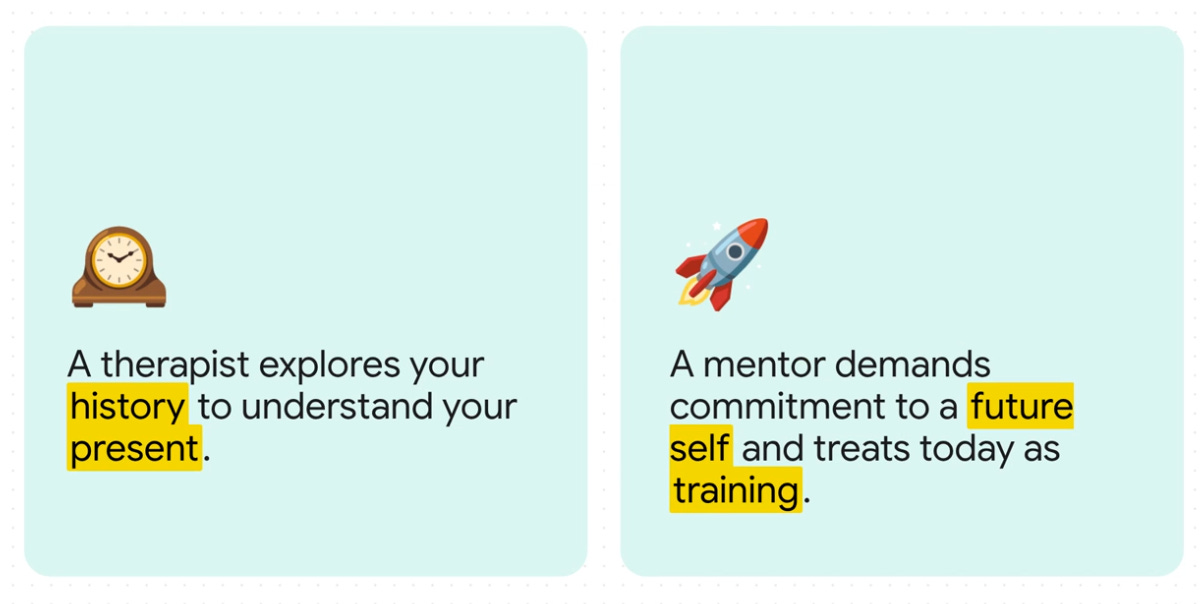
Where a therapist asks “where does that come from,” a mentor asks “what do you do next, today, in 20 minutes.” Both have value. Mentorship is unapologetically forward-biased.
Where a friend says “you’ve got this,” a mentor says “show me.” It doesn’t withdraw care; it channels it into standards, reps, and feedback.
The Mentorship Loop: Ask • Act • Reflect • Adjust